OPERATION: EBC
OBJECTIVE 5,364 M WINDOW MAY 2027 ORIGIN DTW
EXPEDITION EVEREST · 2027
28°00′N 86°51′E · Sagarmāthā · 8,849 m

Operation: Everest Base Camp

Twelve days on foot to the foot of the highest mountain on Earth. This is the real plan — and I want you on it.

Depart
Detroit
Window
Early May '27
Summit view
18,209 ft
The Brief

01 · The Case

Why Everest, and
why early May.

Everyone knows the name. Almost no one goes. Base Camp doesn't ask you to be a climber — it asks you to walk, high and slow, into the most staggering landscape on the planet and stand where the summit expeditions begin.

And early May is the window. Pre-monsoon means warmer days and stable skies, the rhododendron forests below Namche are in full bloom — and because it's the summit-climbing season, Base Camp itself is alive: a small city of expedition tents at 5,364 m, the mountain busy with people trying for the top of the world. Go in May and you don't just see Base Camp. You see it working.

  • No climbing required. It's a strenuous hike, not a technical ascent. If you can train for it, you can do it.
  • Peak-season Base Camp. May is summit season — tents, teams, the real thing.
  • The alpenglow. Sunrise from Kala Patthar (5,545 m) lighting Everest on fire is the payoff photo of a lifetime.
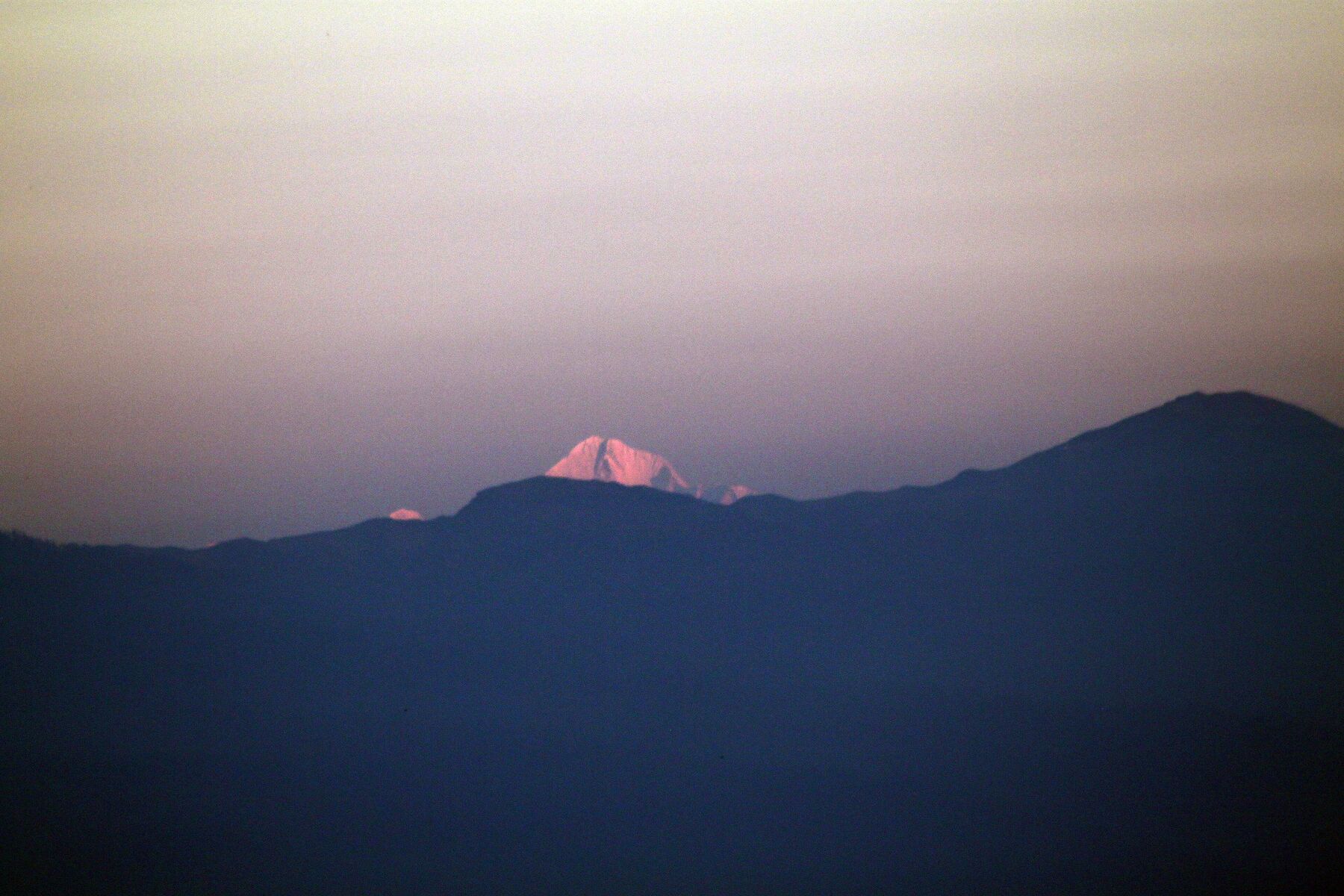
Mount Everest lit orange-pink at dawn
Dawn alpenglow on Everest — the light you climb Kala Patthar for
02 · The Route · 12 days on trail

Every day, every altitude.

Fly into Lukla, then walk north up the Khumbu valley — climbing high, sleeping low, resting twice to let your body catch up with the thinning air. The line below is the trek's real elevation profile. The two flat spots are the acclimatization days that keep you safe.

▲ ACCLIMATIZATION / REST DAY  ·  ● SUMMIT-VIEW DAY  ·  ALTITUDES ARE SLEEPING ELEVATIONS


03 · Field Conditions

What a day actually feels like.

No sugarcoating — this is the real texture of the trek, so you know exactly what you're signing up for.

The walking

5–7 hours a day

Steady, not brutal. Stone paths, suspension bridges strung with prayer flags, yaks with right-of-way. You gain a few hundred meters, drink constantly, and go slow on purpose.

The teahouses

Bed + a wood stove

Family-run lodges every couple hours. A simple twin room with a foam mattress; the heat is one yak-dung stove in the dining room that everyone circles at night. Down low it's cozy; up high it's cold once the sun drops.

The food

Dal bhat power

Lentils, rice, veg, and endless free refills — the trekker's engine. Menus also run to noodles, potatoes, eggs, momos. Eat where you sleep. Go vegetarian up high; the meat has walked a long way.

The cold

T-shirt to sub-zero

Sunny afternoons, then nights that drop well below freezing at altitude. Your sleeping bag is your best friend; hot lemon-ginger and a hot-water bottle are the ritual.

Connectivity

Pay-per-view wifi

Everest Link cards get you slow wifi for a few dollars, and charging your phone costs a little more every day you climb. Half of you will love the disconnection; the other half will pay up.

The plumbing

Bring your own paper

Squat toilets and a bucket up high, hot showers for a few dollars until they stop being worth it. Baby wipes are currency. Nobody looks glamorous at 4,900 m — that's part of it.

04 · The Team · real & hireable

Who takes us up.

We go with a licensed Nepali guide and a porter to carry the heavy duffels — cheaper and more personal than a Western package, and the right call for safety at altitude. Here's how hiring works, and real local outfits to book it through.

Licensed guide≈ $35 / day

English-speaking, NTB-licensed. Covers their own food + lodging. Split across the whole group.

Porter≈ $20–25 / day

Carries up to ~20 kg — usually two people's duffels. One porter per two trekkers.

Or: all-in package≈ $1,150–1,300 pp

A local agency bundles guide, porter, permits, Lukla flights, lodging + meals. Zero logistics.

Prices are pre-booking signals gathered Sept 2026 — reconfirm the 2027 rate, license, and staff insurance directly before paying. Tip norm: pool ~$10–15/day for the guide and ~$8–10/day per porter, handed over at trek's end.


05 · Getting There · DTW → KTM → Lukla

Detroit to the roof of the world.

There's no direct flight — we connect through one Gulf or European hub, roughly a day of travel each way. Fares below are current-market estimates for the early-May shoulder season (2027 seats aren't bookable yet).

AirlineViaStopsTime each wayEst. round-trip
Turkish AirlinesIstanbul1~17h (fastest)$1,050–1,500
Qatar AirwaysDoha1–2~19–25h$1,000–1,550
EmiratesDubai1–2~22–26h$1,200–1,700

The last flight is the wild one ✈

From Kathmandu you fly to Lukla (2,860 m) — a runway carved into a mountainside, routinely ranked the world's most dangerous airport, in the best way. In peak season the fixed-wing flights shift to Ramechhap, a ~4–5 hour pre-dawn jeep ride from Kathmandu, then a ~30-minute flight (~$200 each way). Weather delays are common, so we build in 2–3 buffer days — mostly at the end, before the flight home. A shared helicopter (~$500/pp) is the escape hatch if the planes are grounded.

06 · The Budget · drag to see your number

What it actually costs.

Everything, door to door from Detroit — flights, permits, the guide and porter, every teahouse night, gear, insurance, buffer. The guide, porter and airport jeep are shared, so the more of us go, the cheaper it gets for everyone. Drag the slider.

Per person · all in
$0
group total · $0
Expedition size 4 trekkers
246810

The breakdown

PER PERSON, AT 4 TREKKERS · USD
Per person$0

Estimate, not a quote — built from Sept 2026 market research (see sources in the footer). International airfare is the biggest variable; book early. Excludes trip-cancellation insurance, big personal gear splurges, and souvenirs.


07 · The Kit

What to bring — and what to grab in Kathmandu.

You don't need to own an expedition. Bring what touches your body and buy or rent the bulky stuff cheap in Thamel, Kathmandu's gear district, the day before we fly.

Bring from home

  • Broken-in hiking boots ESSENTIAL
  • Merino base layers ×2–3 ESSENTIAL
  • Hiking socks, underwear PERSONAL
  • Sunglasses (glacier-grade) ESSENTIAL
  • Headlamp + batteries ESSENTIAL
  • Personal meds + Diamox ESSENTIAL
  • Refillable bottles + filter SMART
  • Power bank (10k+ mAh) SMART

Buy / rent in Thamel

  • Down jacket (rent) ~$1/DAY
  • −15°C sleeping bag (rent) ~$1–2/DAY
  • Trekking poles ~$10–20 BUY
  • Duffel for the porter ~$15–25 BUY
  • Fleece / insulated layers CHEAP BUY
  • Beanie, buff, liner gloves CHEAP BUY
  • Rain shell BUY / RENT
  • Everest Link wifi card ON TRAIL

Thamel gear is mostly good-quality knock-offs — perfect for one trek. Rentals need a cash deposit. Budget ~$100–200 to kit out the gaps; it's in the calculator.

08 · Straight Talk

The honest risks.

A good pitch doesn't hide the hard parts. Here's what's real, and how we handle each one.

Altitude (AMS)

The real risk isn't the climbing — it's the thin air. Above ~2,500 m, going too high too fast causes altitude sickness. We beat it the proven way: two rest days, a "climb high, sleep low" schedule, Diamox in the kit, and a guide watching everyone. If someone's struggling, the rule is simple — go down.

The Lukla flight

Weather grounds the Lukla planes regularly, sometimes for days. That's why we pad the schedule with buffer days at the end and keep a shared helicopter (~$500/pp) as the paid escape hatch so nobody misses the flight home.

Cold, fitness & guide rules

It's cold and it's long — 12 days, 5–7 hours of walking a day — so we train for months first. And Nepal's guide rules are tightening; sources conflict on whether a guide is strictly required for Everest in 2027, so we sidestep the whole debate by hiring a licensed one anyway. Good travel insurance with high-altitude evacuation cover is non-negotiable.

09 · The Ask

Are you in?

This only happens if enough of us commit. Here's all I need to lock it in and start booking.

STEP 01Say you're inText me a yes. That's it for now — I just need a real headcount to price flights and hire the team.
STEP 02Hold your seatA refundable deposit toward the shared costs so I can put the guide and dates on hold.
STEP 03We book flightsOnce we're a group, we book DTW→Kathmandu together and the countdown to May starts.
I'm in — let's go ▲
Commit by Dec 2026 to lock early-May fares · Base Camp: May 2027